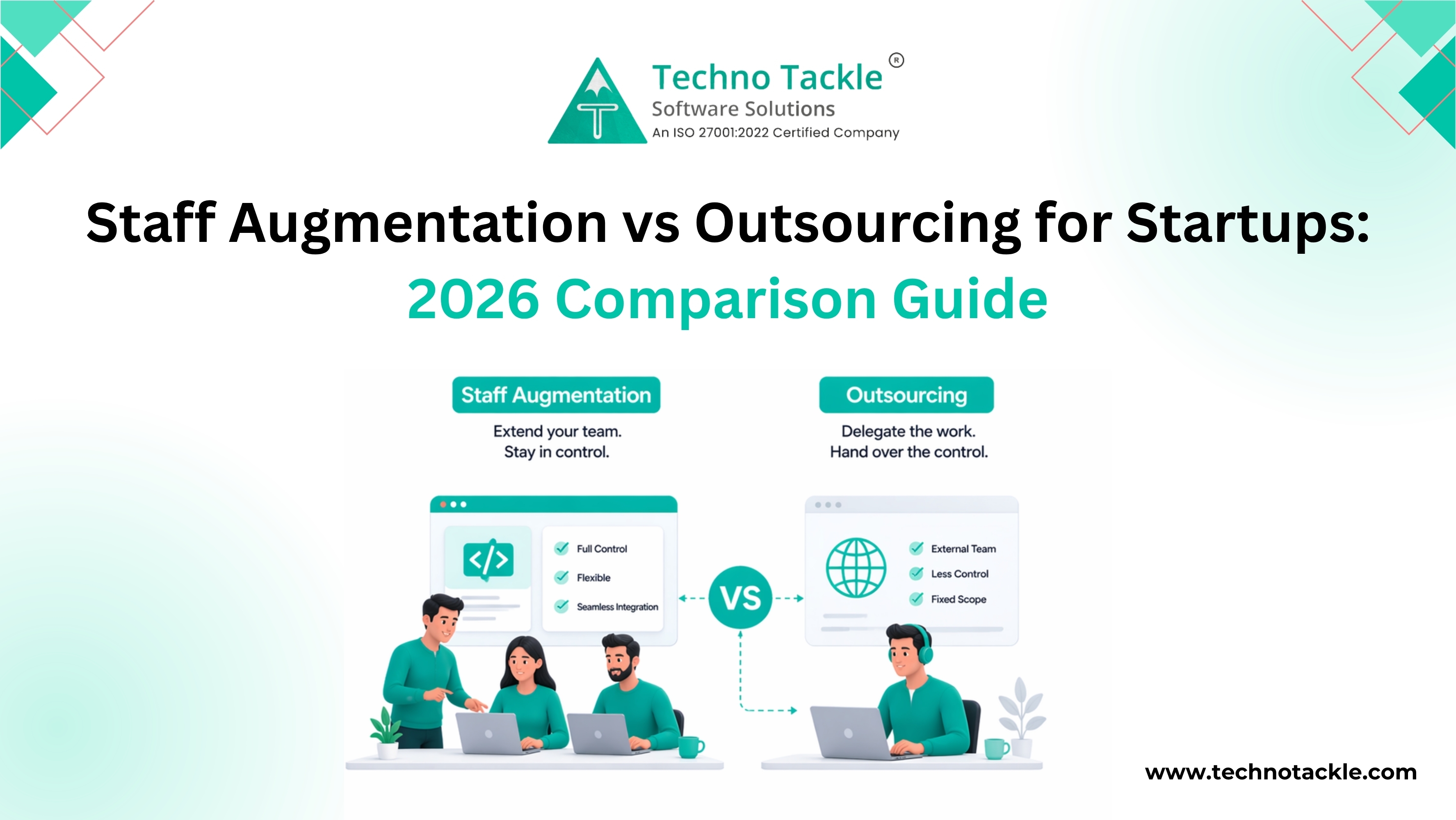
Staff Augmentation Top IT staff augmentation companies comparison showing dedicated developers working remotely for startups and enterprises.

February 20, 2026

Top 10 IT Staff Augmentation Companies to Hire Dedicated Developers and Scale Faster

You need to ship faster. Your internal team is stretched thin. Hiring full-time takes three to six months, and there is no guarantee the candidate fits. Meanwhile, your roadmap keeps slipping and competitors are moving ahead.

This is the exact problem that IT staff augmentation solves. Choosing the right IT staff augmentation services can cut your time-to-hire from months to weeks, plug critical skill gaps, and let you scale without the overhead of permanent headcount. When you hire dedicated developers through the top IT staff augmentation companies, you get vetted talent fast.

This guide covers the top IT staff augmentation companies, how to evaluate IT staff augmentation services, the key difference in staff augmentation vs outsourcing, and why the right partner matters more than the cheapest rate.


What Are IT Staff Augmentation Services?

IT staff augmentation services mean adding skilled developers, engineers, or tech specialists to your existing team on a contract basis. You keep control of the work. The provider handles hiring, payroll, compliance, and HR.

You are not outsourcing a project. You are extending your internal team with external talent, fast. Quality IT staff augmentation services give you access to pre-vetted professionals who integrate directly into your workflows.


Staff Augmentation vs Outsourcing: What Is the Difference?

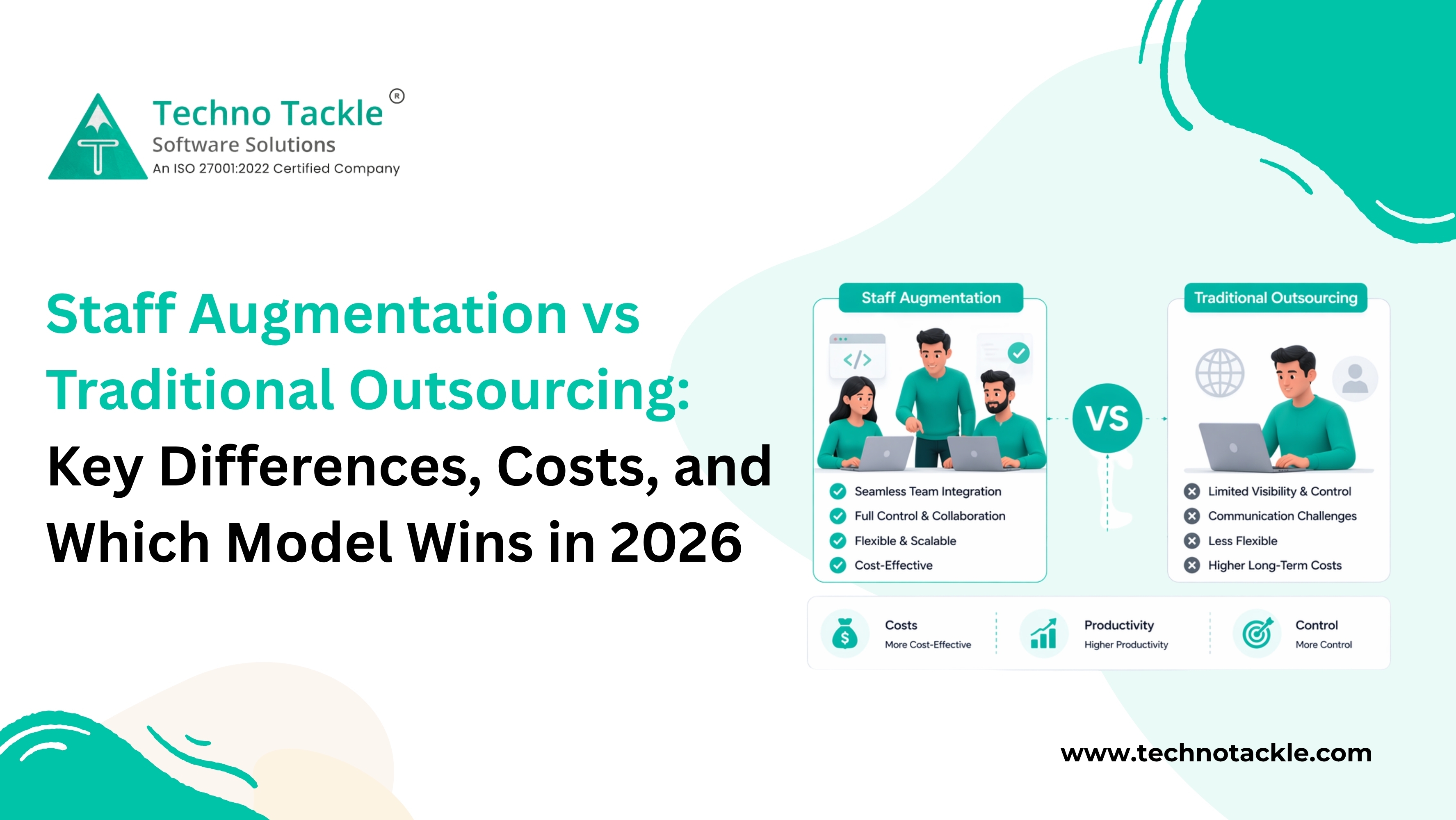
Understanding staff augmentation vs outsourcing is critical. Many companies confuse these models and end up with the wrong solution. Here is a direct comparison:

  • Staff Augmentation: You control the work, manage the team directly, and integrate talent into your workflows. The augmented developers work as an extension of your in-house team.
  • Outsourcing: A third party owns execution, manages their own team, and delivers a finished output. You define requirements but do not manage day-to-day work.
  • Staff Augmentation is better when: You have a defined tech stack, existing processes, and need skilled hands to execute faster. You want direct oversight and cultural alignment.
  • Outsourcing is better when: You lack internal technical capacity and need a vendor to own delivery end to end. You prioritize cost savings over control.

Most growth-stage companies benefit from staff augmentation vs outsourcing because it keeps your team in the driver's seat while adding horsepower exactly where you need it. When you hire dedicated developers through staff augmentation, they become part of your culture and process.


Bad Hires Kill Momentum

Hiring the wrong developer costs more than their salary. It costs sprint cycles, team morale, and velocity. The average mis-hire in tech costs between 1.5x and 3x the annual salary when you factor in lost productivity, ramp-up time, and rehiring costs.

The typical hiring process makes this worse. You post a job, wait weeks, interview candidates who look good on paper but lack the specific stack you need, and then hope for the best during a 90-day probation period. By the time you realize the fit is wrong, you have lost a quarter.

This is why companies turn to top IT staff augmentation companies. They need to hire dedicated developers who are already vetted, already productive, and ready to contribute from day one.


How Techno Tackle Solves This Problem

Most staff augmentation providers send you a list of resumes and let you do the vetting. Techno Tackle takes a different approach. Their IT staff augmentation services include pre-vetted developer networks that go through technical screening, communication assessments, and real-project evaluations before they are ever placed with a client.

This means when you hire dedicated developers through Techno Tackle, you are not starting from scratch. You are choosing from a shortlist that has already been filtered for technical depth, communication quality, and culture compatibility.

The result: most clients have a developer onboarded and productive within 5 to 10 business days. No 60-day job postings. No six rounds of interviews. No surprises after month one.


What to Look For in Top IT Staff Augmentation Companies

Not all IT staff augmentation services are created equal. When evaluating the top IT staff augmentation companies, focus on these specific criteria:

1. Vetting Process

Ask specifically how they screen candidates. If the answer is vague, the talent pool is probably wide but shallow. Look for providers that test technical skills, not just review CVs. The best IT staff augmentation services include documented assessments and trial projects.

2. Time-to-Placement

A good provider should place a qualified candidate within one to two weeks. If they quote longer, their bench is thin or their matching process is inefficient. Top IT staff augmentation companies maintain active pipelines of pre-vetted talent.

3. Replacement Guarantee

Things can go wrong. The best providers offer a no-cost replacement within a defined window if the placed developer is not the right fit. If they do not offer this, treat it as a red flag.

4. Domain Expertise

A generalist staffing firm handles everything from warehouse workers to software developers. That is not what you want. Look for providers who specialize in technology and can demonstrate placements in your specific stack.

5. Transparent Pricing

Hidden fees, vague rate structures, and long-term lock-ins are common in this industry. Demand clarity upfront. Good providers are transparent about hourly rates, markup, and contract terms.


Top IT Staff Augmentation Companies in 2026

Here is a breakdown of the leading providers. Each company on this list has a track record of placing developers quickly with strong technical quality. When comparing top IT staff augmentation companies, consider your specific needs: speed, cost, technical specialization, or geographic preference.

1. Techno Tackle

Techno Tackle is an ISO 27001:2013 certified software development company based in Coimbatore, India, with 10+ years of industry experience. They specialize in staff augmentation for fast-growing startups and mid-market companies across US, India, and global markets. Their developer bench includes 100+ pre-vetted professionals with 8+ years average experience across full-stack development, mobile apps, AI automation, and cloud architecture. They offer expertise in modern tech stacks including React, Node.js, Python, Java, React Native, Flutter, and AI frameworks like LangChain, Langraph, and OpenAI APIs. Their placement timeline averages 5 to 10 business days with flexible engagement models: full-time, part-time, or hourly contracts. Strong track record with clients in SaaS, fintech, healthcare, education, and e-commerce verticals. Best suited for companies needing quick deployment, transparent pricing, and developers who integrate seamlessly into existing teams with minimal management overhead.

2. Smart IT Staff

Smart IT Staff is a subsidiary of Cyntexa with 400+ in-house IT professionals. They specialize in rapid onboarding, typically 0 to 2 days from search to placement. Their pre-vetted talent pool covers developers, architects, QA engineers, and DevOps specialists across Salesforce and ServiceNow platforms. They offer flexible engagement models including time and material, dedicated teams, and managed IT services. Strong choice for companies needing immediate talent deployment with structured vetting processes.

3. Cyntexa

Cyntexa is a Salesforce Summit Consulting Partner founded in 2018. They have 400+ certified cloud platform experts across Salesforce, ServiceNow, AWS, Azure, and Google Cloud. They offer SLA-backed transparency and flexible scaling options. Strong track record with 900+ delivered projects and 675+ global clients across real estate, financial services, retail, and healthcare. Best suited for companies needing cloud platform specialists with proven enterprise experience and transparent pricing models.

4. InfoStride

InfoStride is a certified M/WBE firm founded in 2014 with offices across the US, Canada, India, Singapore, and Dubai. They provide 170+ professionals and a pre-vetted talent network covering web developers, mobile developers, cybersecurity experts, and CMS specialists. They offer on-site, remote, and hybrid engagement models with dedicated account management. Strong presence in public sector, education, healthcare, and government contracts. Good fit for organizations needing diverse staffing options with rigorous vetting processes.

5. Intellectsoft

Intellectsoft has been operating since 2007, specializing in enterprise-grade developers and technology consultants. They offer vetted talent across AWS, Google Cloud, Azure, Kotlin, PHP, Python, and Swift. Their model allows multilevel flexibility where you can mix on-site and remote resources based on project needs. Strong in software development, mobile apps, DevOps, blockchain, and UI/UX. Best for mid-market and enterprise companies with complex technical requirements and longer-term capacity building needs.

6. ScienceSoft

ScienceSoft was founded in 1989 and maintains a talent pool of 750+ professionals. They hold ISO 9001 and ISO 27001 certifications for quality and security. Their team covers custom software development, UX design, cloud engineering, QA, and data science across 30+ industries. They have worked with IBM, Walmart, and NASA. They offer both fixed pricing and time and material models. Best for enterprises and mid-market companies requiring certified talent with decades of hands-on experience and strong compliance credentials.

7. Parallel Staff

Parallel Staff focuses on nearshore staffing from Latin America, providing time zone alignment and cultural compatibility with US-based teams. They specialize in product development and agile teams. Their talent covers full-stack development, mobile, and cloud. Strong emphasis on team collaboration and smooth integration with existing workflows. Good fit for startups and mid-market companies needing cost-effective talent without sacrificing communication quality or timezone overlap.

8. Diffco

Diffco is a Silicon Valley-based company with 15+ years of experience in mobile, web, and AI development. They offer transparent pricing and a free replacement policy to match evolving needs. Their model prioritizes direct communication between clients and augmented staff, making the extended team feel like an in-house extension. Strong in computer vision, image recognition, and secure development. Best for companies needing specialized AI or mobile expertise with clear communication channels and flexible engagement terms.

9. Kubikware

Kubikware is a Florida-based nearshore staffing provider specializing in strict time zone alignment for seamless collaboration. They cover end-to-end product launches, AI digital transformation, and maintenance work. Their flexible engagement models support on-demand scaling, making them suitable for companies requiring rapid team ramp-ups for specific projects. Good for businesses needing nearshore talent with minimal time zone friction and fast deployment cycles.

10. Rootstack

Rootstack focuses on senior-level talent that can work with minimal supervision. Their developers are experienced in full-stack development with strong emphasis on time zone adaptability for US and European clients. They cover frontend, backend, DevOps, QA, and UI/UX design roles. Their seniority-focused approach means faster onboarding and less management overhead. Best for companies needing experienced developers who can operate independently and make architectural decisions without constant oversight.


How to Hire Dedicated Developers Without Wasting Time

Most companies overcomplicate this. Here is a direct process that works when you hire dedicated developers:

  1. Define the role with precision. Not just 'React developer.' Specify the stack, seniority level, timezone overlap requirement, and expected ramp-up timeline.
  2. Set a clear engagement budget. Know your rate ceiling before you start talking to providers. This prevents wasted conversations and protects against scope creep.
  3. Evaluate two to three top IT staff augmentation companies in parallel. Do not commit to the first pitch. Compare time-to-placement estimates, vetting processes, and contract flexibility.
  4. Do a short technical screen yourself. Even with vetted talent from the top IT staff augmentation companies, a 30-minute technical conversation reduces mis-hire risk significantly.
  5. Start with a defined project milestone. Give new augmented developers a specific 2 to 4 week deliverable. It sets expectations and gives you a real quality signal fast.


IT Staff Augmentation Services: What Should Be Included

Not all IT staff augmentation services are equal. A quality engagement should include:

  • Candidate sourcing and pre-screening at no extra cost to the client
  • Technical assessment reports or test results you can review before interviews
  • Onboarding support to help the developer integrate into your tools and workflows
  • Dedicated account management so you are not emailing into a ticket queue
  • Clear contract terms with no hidden fees, exit clauses, and IP protection
  • Replacement guarantee if the placement does not work out within the agreed trial period


Techno Tackle's IT staff augmentation services include all the above. See their full-service breakdown here.


Why Techno Tackle Stands Out Among Top IT Staff Augmentation Companies

If you are a startup or mid-market company trying to move fast, Techno Tackle solves three specific problems that kill momentum:

  • Slow hiring cycles: Their average placement time is under 10 business days compared to 6-12 weeks with traditional hiring.
  • Poor technical fit: Pre-vetted candidates with domain-specific screening reduce mis-hire rates significantly.
  • High overhead: Their model is flexible. Scale up or down based on your current phase without permanent headcount risk.

They have placed developers in SaaS, fintech, health tech, and e-commerce verticals. Their team has experience matching not just technical skills, but also working style, communication quality, and product mindset.


Common Mistakes Companies Make with IT Staff Augmentation

Choosing on price alone

The cheapest provider among the top IT staff augmentation companies almost never delivers the best talent. Rate compression usually means weaker vetting, lower developer quality, or hidden fees that offset the savings. Understanding staff augmentation vs outsourcing also helps here: outsourcing may look cheaper but removes your control.

Not setting clear expectations upfront

Augmented developers need context. If you drop someone into a codebase without documentation, clear task ownership, or defined communication norms, you will get poor output regardless of their skill level.

Treating augmented staff as temporary and disposable

The best augmented developers stick around when they are treated like part of the team. High turnover in augmented roles is usually a management issue, not a talent issue.

Skipping the trial milestone

Every new engagement should start with a clear 2 to 4 week deliverable. This creates a low-risk signal on quality and fit before you go deeper on a long-term contract.

Build Your Team Faster

If your development velocity is limited by headcount, IT staff augmentation is the fastest lever you can pull. The key is picking the right partner from the top IT staff augmentation companies, not just the cheapest one.

Techno Tackle has a straightforward process. You describe what you need, they surface pre-vetted candidates within 48 hours, you run a short screen, and you start. No long contracts, no hidden fees, no surprises.

Learn more about Techno Tackle's dedicated developer programs at our website.


Conclusion

Scaling a tech team does not have to be slow or expensive. IT staff augmentation gives you access to vetted developers fast, without the overhead of permanent hiring. The companies that move fastest in 2026 are the ones that use this model smartly, pairing the right provider with a clear internal process.

When you hire dedicated developers through the top IT staff augmentation companies, you get speed, quality, and flexibility. Understanding staff augmentation vs outsourcing helps you choose the right model for your needs. The right IT staff augmentation services reduce hiring time from months to days while maintaining technical quality and cultural fit.

If you are ready to stop waiting on slow hiring cycles, Techno Tackle is worth a conversation. They specialize in placing dedicated developers quickly, with technical quality that holds up long-term.

Book a call with Techno Tackle now

Read more
Staff Augmentation Staff augmentation firms vs traditional outsourcing comparison for IT teams

February 12, 2026

How do staff augmentation firms differ from traditional outsourcing companies?

Businesses often use the terms interchangeably, but staff augmentation firms and traditional outsourcing companies operate under very different models. The distinction is not cosmetic. It affects who controls execution, how flexible your budget remains, how quickly you can scale, and how fast you can adapt when priorities change.

If you are evaluating hiring models for product development or IT initiatives, understanding this difference will prevent expensive structural mistakes. This guide explains how both models work, where they diverge, and when each makes strategic sense.


What Are Staff Augmentation Firms?

Staff augmentation firms provide external professionals who temporarily join your internal team. An IT staff augmentation firm supplies developers, engineers, designers, QA specialists, or DevOps experts who work under your management structure.

These professionals:

  • Report to your internal team leads
  • Use your collaboration tools
  • Follow your sprint cycles
  • Attend your standups and planning sessions

The only real difference is employment status. Operationally, they function as part of your team.

This model is designed for companies that want to fill skill gaps without surrendering project control. You manage execution. You assign tasks. You maintain architectural authority.


What Is Traditional Outsourcing?

Traditional outsourcing works differently. Instead of embedding talent into your team, you hand over an entire project or function to an external vendor.

The outsourcing company:

  • Builds and manages its own team
  • Controls execution
  • Defines internal processes
  • Delivers completed output

Communication usually happens through project managers or account managers. Direct access to developers is limited or structured through formal channels.

Traditional outsourcing is built for delegation. You define the requirements. The vendor executes and delivers.


The Core Differences Between Staff Augmentation and Traditional Outsourcing


Control and Ownership

The most significant difference lies in control.

With staff augmentation firms, you retain direct management authority. You can change priorities mid-sprint, shift timelines, or adjust technical decisions without contract renegotiation.

With traditional outsourcing, control shifts to the vendor. Any scope change typically requires formal evaluation, change orders, and revised pricing. This slows decision cycles.

For companies operating in fast-moving markets, that difference matters.


Integration and Collaboration

An IT staff augmentation firm embeds professionals directly inside your workflow. That creates continuous collaboration, ongoing knowledge transfer, and long-term system familiarity.

Outsourced teams, by contrast, operate independently. Knowledge transfer often happens at the end of the project. This separation can create documentation gaps and slower iteration cycles.

For products requiring long-term evolution, embedded collaboration tends to perform better.


Flexibility and Scalability

Staff augmentation allows you to scale talent up or down based on workload. Most agreements include short notice periods, which reduces long-term commitment risk.

Traditional outsourcing contracts are typically fixed in scope and duration. Scaling often requires renegotiation. Reducing scope may trigger penalties.

If your roadmap is fluid, staff augmentation offers more adaptability.


Cost Structure

Cost models differ structurally.

Staff augmentation firms charge per developer, usually on an hourly or monthly basis. There is no vendor project management layer built into the structure.

Traditional outsourcing bundles:

  • Development team costs
  • Project management overhead
  • Vendor profit margins
  • Operational infrastructure

For evolving projects, outsourcing can accumulate hidden costs through change requests and coordination overhead. Staff augmentation tends to provide clearer cost transparency.


Speed to Start

Staff augmentation engagements often begin within weeks. Pre-vetted candidates can be interviewed and onboarded quickly.

Traditional outsourcing requires an RFP process, vendor evaluation, contract negotiation, and team assembly. That can extend timelines by several months.

If time-to-market is critical, deployment speed becomes a deciding factor.


When Should You Choose Staff Augmentation Firms?

Staff augmentation is most effective when:

  • You need specialized skills quickly
  • Your product roadmap evolves frequently
  • You want to retain technical ownership
  • You require gradual scaling
  • You prefer flexible contracts

This model is common among SaaS companies, startups, and growth-stage businesses where continuous iteration is necessary.

It also works well when testing new roles before committing to permanent hires.


When Does Traditional Outsourcing Make Sense?

Traditional outsourcing can be effective when:

  • Requirements are clearly defined and stable
  • The project is standalone
  • You lack internal technical leadership
  • You want to delegate execution entirely

It is often used for internal enterprise systems, legacy modernization with fixed scope, or non-core functions.

In those scenarios, predictability can outweigh flexibility.


Are Staff Augmentation Firms Better Than Traditional Outsourcing?

Neither model is universally superior. They solve different problems.

Staff augmentation optimizes for:

  • Agility
  • Direct control
  • Continuous product evolution

Traditional outsourcing optimizes for:

  • Delegation
  • Structured delivery
  • Fixed-scope predictability

For companies building customer-facing products that evolve over time, staff augmentation often aligns better with long-term strategy.


How to Evaluate Top IT Staff Augmentation Companies

If you are comparing top IT staff augmentation companies, focus on operational quality rather than marketing claims.

Evaluate:

  • Screening and vetting process
  • Replacement guarantees
  • Time zone alignment
  • Communication transparency
  • Documentation standards
  • Contract flexibility

A strong IT staff augmentation firm will allow direct developer interviews, transparent pricing, and flexible exit terms. Avoid vendors who restrict communication or lock you into rigid agreements.


Common Mistakes to Avoid

One common mistake is choosing purely based on hourly rates. Lower pricing often signals lower experience levels or limited integration support.

Another mistake is failing to integrate augmented staff properly. If external professionals are treated as peripheral contributors instead of core team members, performance suffers.

Finally, companies sometimes outsource strategic product components too early. Delegating core product ownership can create long-term technical dependency.


Final Decision Framework

Choose staff augmentation firms if you need speed, flexibility, and execution control. Choose traditional outsourcing if your scope is fixed, your priorities are stable, and you prefer complete delegation. In modern product environments where requirements evolve continuously, maintaining internal control often produces stronger long-term outcomes.

At Techno Tackle, we work with companies that want to extend their teams without losing ownership of product decisions. As an IT staff augmentation firm, we provide pre-vetted developers who integrate directly into your workflows, report to your managers, and adapt as your roadmap evolves.

Understanding this structural difference allows you to align your hiring model with your business strategy instead of reacting to short-term pressure. Before committing, assess your roadmap volatility, internal management capacity, and appetite for flexibility. The right choice depends less on cost alone and more on how much control you need over execution. If maintaining that control is critical, partnering with a focused staff augmentation firm like Techno Tackle can help you scale without sacrificing oversight.

Schedule a free 30-minute strategy call with us.

Read more
Staff Augmentation staff augmentation vs outsourcing comparison for US startups

January 29, 2026

Staff Augmentation vs Outsourcing for US Startups: What Actually Works at Scale

The US tech talent gap is no longer a future problem. It is a current constraint. In 2024 alone, hundreds of thousands of tech roles remained unfilled. For startups, this creates a forced decision point.

You either slow down.
Or you extend your team outside the US.

That is where the staff augmentation vs outsourcing debate begins. And despite what many vendors claim, this choice has real consequences for speed, cost, and long-term control.

I have seen strong products stall not because of bad ideas, but because founders picked the wrong execution model too early. This decision quietly shapes your burn rate, delivery velocity, and how much knowledge stays inside your company.

Let us break it down without fluff.


Understanding the Real Difference Between Staff Augmentation vs Outsourcing

These two models are often used as if they mean the same thing. They do not.

Software development staff augmentation means external developers join your team. They work inside your systems. You manage priorities. You review their code. They follow your processes. Functionally, they behave like in-house engineers, minus the hiring overhead.

Outsourcing means handing off responsibility. You define what needs to be built. The vendor decides how to build it. You get deliverables, not daily visibility.

The difference is control.

With staff augmentation, execution stays with you.
With outsourcing, execution moves outside your company.

That distinction becomes critical as your product evolves.


When Staff Augmentation vs Outsourcing Actually Works for Startups

There is no universal winner. The right choice depends on what you are building and how much uncertainty exists.


Why Staff Augmentation Wins for Core Product Development

If you are building your main product, offshore staff augmentation is usually the safer bet.

Here is why.

First, knowledge stays inside your company. Augmented developers learn your domain, your users, and your technical trade-offs. That context compounds over time. When someone leaves, your team does not lose the logic behind past decisions.

Second, iteration is faster. Product direction changes weekly in early-stage startups. With software development staff augmentation, developers adapt immediately because they are already part of the conversation. Outsourcing requires re-scoping, approvals, and renegotiation.

Third, culture and ownership matter more than founders expect. Augmented developers join standups, retrospectives, and planning sessions. They understand why things matter, not just what to build. That reduces rework and friction.

One fintech startup I advised chose offshore staff augmentation instead of outsourcing backend work. The developers worked directly with the founders, influenced architecture decisions, and shipped critical features within months. Those features played a direct role in closing their next funding round.

That outcome would have been unlikely with a black-box outsourcing model.


When Outsourcing Makes More Sense

Outsourcing can still be the right move, but only under specific conditions.

It works best when the scope is stable and clearly defined.

Examples include:

  • Data migration
  • Infrastructure setup
  • A standalone mobile app
  • Internal tools with fixed requirements

In these cases, outsourcing reduces coordination overhead. You describe the outcome, set milestones, and let the vendor execute.

Outsourcing also works well for specialized, time-bound work. DevOps migrations and compliance-heavy tasks are common examples. One e-commerce company successfully outsourced an AWS migration while keeping its internal team focused on customer-facing features.

The key requirement is clarity. If the problem is still evolving, outsourcing will slow you down.


Hidden Costs That Change the Staff Augmentation vs Outsourcing Math

Most founders compare hourly rates. That is a mistake.

The real costs show up elsewhere.


The Coordination Cost

Outsourcing demands heavy upfront documentation. Specs, wireframes, acceptance criteria, and constant review cycles. Someone on your side must manage this full-time.

With offshore staff augmentation, developers live inside your existing workflows. Context flows naturally through meetings and async communication. Less translation. Less overhead.


The Quality Risk

Outsourced work often looks fine until it hits production. Edge cases surface late. Architectural mismatches appear after delivery. Fixes cost more because context is missing.

With software development staff augmentation, quality control happens continuously. Code reviews, design discussions, and feedback loops catch issues early.


The Knowledge Transfer Problem

As startups grow, they eventually bring work in-house. Outsourced systems are painful to absorb. New engineers must reverse-engineer decisions they were never part of.

With staff augmentation, knowledge transfer is ongoing. Your internal team already understands the system because they helped build it.


The Scaling Phases Where This Decision Matters Most


Seed to Series A

This phase is about speed and learning. You are validating demand and refining your product.

Staff augmentation usually wins here.

You need senior talent without long-term hiring commitments. Offshore staff augmentation provides that leverage at a fraction of US hiring costs, without sacrificing control.


Series A to Series B

Now things get more nuanced.

Core product work still benefits from software development staff augmentation. But outsourcing becomes viable for clearly scoped side projects like integrations or internal tools.

Many successful startups use a hybrid model at this stage.


Series B and Beyond

Larger companies build stronger in-house teams. Still, offshore staff augmentation remains useful for rapid scaling, experimentation, or new initiatives.

Outsourcing shifts toward audits, performance tuning, and specialized compliance work.


How to Execute Staff Augmentation Without Regret

Choosing staff augmentation is not enough. Execution determines success.


Start Small

Begin with one developer. Run a three-month pilot. Assign real work, not test tasks. Evaluate skills, communication, and ownership before scaling.


Onboard Seriously

Treat augmented developers like permanent hires. Poor onboarding is the fastest way to fail with offshore staff augmentation.

Clear documentation. Pair programming. Assigned mentors. The first two weeks set the tone.


Design Communication Intentionally

Time zones require structure. Define overlap hours. Use them for decisions and collaboration. Document outcomes clearly so work continues smoothly async.


Hold the Same Standards

Measure augmented developers exactly like your internal team. Same expectations. Same accountability. That is how you get real ownership.


Making the Right Staff Augmentation vs Outsourcing Decision

This is not an ideological choice. It is a practical one.

Use software development staff augmentation for anything tied to competitive advantage, product differentiation, or long-term iteration.

Use outsourcing for fixed-scope, non-core work where uncertainty is low.

Most early-stage startups benefit more from staff augmentation because control and learning compound over time. Cost savings matter but retained knowledge matters more.

The startups that scale efficiently are not the ones that move fastest at any cost. They are the ones that make talent decisions that keep paying off.


Partner with TechnoTackle for Offshore Staff Augmentation

TechnoTackle focuses exclusively on offshore staff augmentation for US startups that need speed without losing control.

Our developers integrate directly into your teams. You manage priorities. We handle hiring, payroll, compliance, and infrastructure. Average experience is 8+ years across modern stacks including React, Node.js, Python, Java, and AI frameworks.

This is not outsourcing. You stay in charge.

Our engagement models support pilots, long-term extensions, and rapid scaling. Whether you need one specialist or a full distributed team, we match talent to your technical and cultural standards.

If you are evaluating staff augmentation vs outsourcing and want a clear recommendation based on your current stage, book a consultation. We will assess your needs and outline a practical execution plan.

TechnoTackle works with startups that want leverage, not dependency.


Read more
Staff Augmentation A graphic showing how staff augmentation boosts productivity and flexibility for small to medium-sized businesses.

December 17, 2024

How Staff Augmentation Benefits Small-Medium Enterprises

The Hidden Benefits of Staff Augmentation for SMEs

Emma, the owner of a small and rapidly growing online retail shop, woke up at dawn on Monday morning and is looking at the list of tasks. She already needs to catch up on her marketing campaign; she requires a developer for features on the website, or there is congestion in the customer service section. It is impossible to hire people for each of these positions full-time; her budget doesn’t allow that. After weeks of stress, she stumbles upon a solution that changes her business:


Staff Augmentation

Emma quickly realized she could hire a talented developer for a three-month project, a marketing specialist for four hours a day, or extra customer support during the burst hours. Her employees are more productive, and her company benefits significantly as she does not have to spend time putting out fires.

Emma’s story is not unique. Many problems are familiar to small and medium-sized enterprises (SMEs) irrespective of country. While constrained budgets, scarce human capital, and tremendous pressure to excel characterize SMEs, organizations must look for creative ways of growth. Welcome to staff augmentation, a versatile solution that offers the opportunity to enrich a team with highly qualified candidates without additional expenditures on permanent staffing.


What is Staff Augmentation?

Staff augmentation is a tactical staffing model in which an organization temporarily hires an independent worker to supplement human capital or for a specific project. You must outsource with freelancers, contractors, or a remote team.


Types of Staff Augmentation:

  • Skill-based augmentation: Especially for positions for which specific skills are needed.
  • Commodity-based augmentation, Such as data entry type of duties or customer service.
  • Highly skilled augmentation: The format is more suitable for a technical or creative position.

Staff augmentation is quicker, less expensive, and more flexible than conventional recruiting, making it perfect for SMEs with fluctuating workloads.


The Unique Challenges Faced by SMEs

SMEs always work under pressure in unfavorable conditions, unlike large companies that will not experience resource scarcity. Key hurdles include:

  1. Limited Budgets: SMES may need help to employ specialized individuals full-time, so they must consider other staffing options.
  2. Need for Specialized Skills: Some projects require skills and talents not on the organization’s staffing list.
  3. Pressure to Innovate: As competition continues to heat up, the battle for market leadership requires new concepts and young minds.

In a 2022 Deloitte study on the labor challenges SMEs face, 61% mentioned it as their top limiting factor for growth. Staff augmentation eliminates these gaps in a company’s service delivery without compromising resources.


How Staff Augmentation Solves Key SME Challenges

1. On-Demand Skilled talent

Looking for a data analyst to hire for three months? Or a graphic designer for your rebranding campaign? The benefit of staff augmentation is that you can draw on the services of specialists to a greater extent when you want them: no staff leasing agreements here.

2. Flexibility Without Financial Commitment

Staff augmentation involves different expenditures on benefits, training, and hiring than hiring in-house employees. This is especially significant in establishing value for SMEs operating under thin profit margins.

3. Scalability for Seasonal or Project-Specific Needs

Regardless of a season of increased workload, such as the holidays, or even a single 1-off project, staff augmentation lets SMEs change their team’s size without much effort.


Savings and Efficiency Cost

Staff augmentation has many benefits, but one of the most notable is that it is considerably cheaper than traditional recruitment.

  • Lower Overhead: Better yet, there is no need to invest in purchasing office space and equipment such as computers and other related features, not to mention full-time salaries for personnel.
  • Reduced Recruitment Costs: The overall average time and cost of traditional recruitment are 42 days and $4,129 (SHRM, 2021). Staff augmentation eliminates these delays and reduces expenses.
  • Efficiency Gains: With the right talent, a company can get the right person on board and speed up the project, thus reducing cost and time.

According to a survey conducted by Upwork in 2023, 67% of the SMEs employing staff augmentation experienced a 30% optimization in project expenses compared to in-house staff recruitment.


Improved Speed and Agility

Time is of the essence, and staff augmentation is a real game changer. Larger organizations take several weeks to hire and recruit talent, while SMEs can hire and recruit talented candidates in days.

Another example of staff augmentation is the story of the UK-based SME operating in the fintech industry; the company needed to develop a prototype, allowing it to do so in only two months instead of the time it would have taken to hire full-time employees. The result? They captured the first mover funding first compared to their competitors.


Access to a Global Talent Pool

SMEs can now afford to expand talent search to their localized operations. The staff augmentation model allows for access to a professional workforce from anywhere.

  • Global Reach: Should you hire a Java backend developer in Estonia or a social media specialist in Brazil? Staff augmentation helps SMEs find talent from around the world.
  • Cost-Effective Solutions: Hiring globally can also mean lower rates without compromising quality.

The Freelancer Force estimates there will be 1.57 billion freelancers by 2023, which presents SMEs with a massive opportunity to source talent from diverse backgrounds.


Focus on Core Business Goals

Outsourcing non-core tasks through staff augmentation allows SMEs to free up their internal teams to focus on strategic priorities.

For example:

  • Delegating IT maintenance allows your team to prioritize innovation.
  • Augmenting customer support ensures your marketing team can focus on lead generation.

This balance helps increase efficiency and helps prevent business objectives from being set aside.


Staff Augmentation Risks and How to Avoid Them

Staff augmentation is a very effective business model, but like all business models, it has drawbacks. However, Clementi recognizes that these risks can be well managed when specific procedures are considered.

1. Integration Challenges: Temporary staff sometimes need help integrating with the rest of the staff and organizational norms or procedures.

Solution: They should clarify the necessary protocols, give out handouts to the new employees, and assign someone to show them what to do.

2. Quality Control: SMEs may be concerned about the kind of work that can be produced by external talent.

Solution: Hire them from the right sources, check their portfolio and reviews, and contact past clients before you hire them.

3. Communication Barriers: When dealing with remote employees or even those found in different parts of the world, there could be trouble coordinating time or language barriers.

Solution: Appropriate tools include Slack, Zoho Projects, or Zoom to harmonize and monitor progress.

Underpinning these risks is the potential for them to disrupt the company’s function if not adequately addressed. However, these risks are not impossible to manage, given that staff augmentation presents a gold mine for SMEs when handled correctly.


Case Study: SME Success Story

Imagine a family-run marketing agency, Bright Spark Strategies, based in New York. The company landed with a major client but needed more resources to meet the tight deadlines. Instead of hiring full-time employees, they opted for staff augmentation, onboarding two designers and a copywriter for three months.

The result?

  • The project was completed ahead of schedule.
  • The client extended their contract.
  • Bright Spark’s revenue increased by 25% that quarter.

This real-world example shows that SMEs can use staff augmentation to upscale and generate outstanding results without breaking the bank.


Future Trends in Staff Augmentation

Staff augmentation is in the middle of this process; with the growing focus on the future of work, it is already changing. Here are some trends SMEs should watch:

  1. Rise of Hybrid Work Models: Some organizations have a centralized team, while others have reserve staff with which they collaborate for more elasticity.
  2. AI-Powered Talent Matching: Automated processes are improving business matchmakers’ prospects and streamlining the fundamental process of Business matchmakers.
  3. Specialized Niches: As new and advanced industries, such as AI, Blockchain, and Green Industries, continue to emerge, the requirements for specialized staff augmentation will increase correspondingly.

Grand View Research (2023) forecasts that the global staff augmentation market will increase at an 11.2% annual rate and reach $ 132 billion by 2028. SMEs implementing this strategy will now benefit from the future market since the strategy will be well implemented.


When should an SME Consider Staff Augmentation?

Still, trying to decide whether your business needs staff augmentation or not?

Here are some signs that it’s time to explore this option:

  • You have short-term projects requiring niche expertise.
  • Your in-house team is overburdened.
  • Your business experiences seasonal spikes in workload.
  • You need to test new markets or services without overextending resources.

If any of these situations described above seem familiar, then staff augmentation could perfectly match your business model.


Get Top IT Staff Augmentation Solutions From Techno Tackle

To the SMEs, staff augmentation is not merely plugging a gap but a value addition. SMEs can gain easy access to skilled talent and cut costs while increasing flexibility, enabling them to counter resource limitations prevalent in the market's competitiveness.

Suppose you need to expand operations, implement the means to innovate quicker, or redirect some of the work from your teams’ plates. In that case, staff augmentation brings opportunities that classic hiring simply can’t.

So, what’s stopping you? Contact Techno Tackle Software Solutions now and let our staff augmentation service change your business today.

Read more
Staff Augmentation A comprehensive guide to hiring the right MERN stack developers for your business needs and team fit.

November 28, 2024

Things to Consider Before Hiring MERN Stack Developers

How to Choose the Right MERN Stack Developers for Your Project

Companies often search for MERN stack developers as more businesses need digitization and opportunities to create modern web applications. M for MongoDB, E for Express.js, R for React, and N for Node.js make the MERN stack the perfect solution for developing scalable applications. However, since its popularity grows, it takes some time to consider suitable candidates when looking for candidates for MERN stack development. This guide will look at critical areas that will aid you in making your decision when hiring MERN stack developers.


What is MERN Stack?

Components of MERN: These are MongoDB, Express.js, React and Node.js

MERN Stack is an impressive platform that encloses all the layers, starting with a database and reaching the user interface. Here’s a quick breakdown:

MongoDB: It is a NoSQL database that provides the choice in data storage.

Express.js: An API development kit that works as a backend framework.

React: A frontend library that guarantees a quick and responsible response to the app’s user interfaces.

Node.js: A platform for running the JavaScript language on the server side of an application.


By using the MERN stack, firms can design manageable, practical applications that require low maintenance. Its JavaScript-centric nature is enticing, as developers working with Node.js only must know JavaScript to develop both the front and back end.


What You Need to Know About Your Project?

1. How to Decide the Parameters of Your Project

Hiring should only be done with a clear understanding and agreement on the following matters: the assignment's particulars to be entrusted to the hired consultant. When deciding what type of project you want, including desired features or added complexity and time constraints, it will be essential to inform potential candidates about these expectations.


2. Evaluating MERN Stack for Your Project

As with all tech stacks, the MERN stack is best suited for one-page applications, e-commerce, and social media. So, if your project falls under one of these categories, then it suggests that MERN stack developers are suitable for these projects.


3. Effects of Previous Work Experience

Search for developers who have some practice in MERN stack projects, focusing on ones like your project. Working for these companies and bug fixing, they build up experience that makes them better placed to tackle this stack and do it more efficiently.


4. Ideal Skills and Competencies

A MERN stack developer should be knowledgeable in one language: JavaScript, front-end React, back-end Node.js and Express, and the database MongoDB. Knowledge of other frameworks or libraries is desired.


5. Reports to Portfolio Manager/Team Leader & reviews own Portfolio and previous work

Knowledge of a particular developer should be gathered from something other than a portfolio but from invaluable information about the developer's versatility. When choosing a project, focusing on tasks that will realize complicated functions, minimalistic designs, and easy-to-navigate graphic interfaces is advisable.


6. Identifying Project Similitude and Project Complication

Determine if the developer has previously worked on comparable projects to your company’s project. This can be a good sign of their work capability when it comes to handling your project suitably.


7. Technical Skills Assessment

Fundamentals of MongoDB, Express, React, and Node

Ensure that your candidate possesses profound skills in using the MERN stack. All of them are crucial, and qualified specialists must perform all of them.


8. Previous knowledge of JavaScript, Frontend, and Backend Development

JavaScript is the primary programming language of the MERN stack, so a robust knowledge of JavaScript, together with a basic understanding of both frontend and backend development, is absolutely necessary.


9. Best Practice Knowledge of Development

The implementation of efficient Code Quality and Clean Coding Standards

Code reliability is essential, so clean and efficient code should always be coded. Source control: Developers should always ensure that their coding format meets a particular standard and is easy to manage in the future.


Understanding of Git and Version Control

Version control tools, such as Git, are very useful for working in a team. Ensure your developer is comfortable using Git as a version control system, changing tracking software, and using collaboration tools.


10. Testing and Debugging Skills

Role Interest and Purpose of High Proficiency Level in Testing

A good MERN stack developer also demonstrates the ability to test their code. Testing demands the essential elements of functionality, helps to catch errors that are less expensive in the long run, and simplifies the collection of bugs.


Basic idea about Debugging Tools and Techniques

Debugging has always been a process that accompanies development from its simpler forms in classical structured programming languages to more complex tasks in modern object-oriented languages. Motorists should possess superior debugging skills and be acquainted with tools to help in the process.


11. Integrated Communication plan and Cooperation of the team

Of all these factors, communication is the most significant one.

The immediate manager must have strong communication skills since the developer may be hired remotely. Conflicting directions create confusion during project development and implementation, which is easily avoided.


12. Prior experience working with remote teams

Especially in the new everyday remote work environments, it is ideal if your developer has had previous practice in remote communication. Prior experience with tools such as Slack, Zoom, and Asana is an advantage. That was an Agile development process, indeed.


Why is Agile Important for Today’s Projects?

Scrum and Kanban are Agile methodologies emphasising flexibility and constant progress. One benefit of understanding Agile is the ability to meet developers' changing requirements. Working knowledge of Scrum, Kanban, and other agile frameworks. An experienced developer with an Agile framework can introduce order and effectiveness to your project and save time.


Estimating Development Costs

Budget is one factor that is considered heavily when developing any project plan and schedule. The rates MERN stack developers charge for their services vary, meaning that price will have to be adjusted to quality depending on your pocket.


Balancing Quality with Budget

Remember that quality development may often be costly compared with other projects, which is an excellent time to remember. It is better to choose targets for which materials can be bought reasonably priced yet mastered only by skilled workers.


Time Zone compatibility and availability

Check out the developer's approximate availability so that you or she is on par with your timeline. A lack of definition of working hours and time to meet deadlines can lead to problems later. Some Features of Your Work You Are Willing to Overemphasize. It is only possible when at least a few working hours coincide Between two organizations because it facilitates real-time contact. Problem-solving is the most critical element, and creativity follows it.


Reasons Why Innovation Is Important

Web development always presents a scenario in which creative solutions are likely needed. A good MERN stack developer should be able to provide recommendations on how best to overcome the challenges.


1. Testing a Developer’s Problem-Solving Ability

When evaluating the ability to solve problems, we might use a technical assessment, an interview, or a review of former projects. Focus on indicators of creativity and flexibility, such as the possibility of product development.


2. Cross-checking References and Reviews

Talking to an employer or client who has worked with the developer before can yield information such as working habits, proficiency, and punctuality.


3. Approaches for interpreting reviews & feedback

Search for such remarks as communication, technical skills, and ability to complete projects to determine a candidate’s suitability in an organization.


Comparing the Advantages of PHP .NET and MERN Stack

PHP and .NET are reliable and secure when searching for the tech stack. They perform well when dealing with records and complicated backends and are considered dependable for use in enterprises, especially those with sensitive data.

While the MEAN stack (MongoDB, Express.js, Angular, Node.js) operates with JavaScript on both sides of the app development process, it is easier and quicker to implement. MongoDB is highly scalable due to its NoSQL structure, suitable for real-time applications such as live chat and ideal for generating UI elements dynamically using React. Besides being open-source, MERN demands less money to be invested in its implementation, which will be perfect for businesses still in their active growth phase or startups.

In other words, PHP and .NET are suitable for enterprise-standard applications with fixed formats and security demands, as is MERN for tomorrow’s web applications requiring scalability and/or real-time data, as well as usability.

Finding the right MERN stack developer for your business can be a real advantage that will significantly change operations for the better. Thus, you will have experience, technical skills, communication, cost, and problem-solving information to make a hiring decision that meets your specific project requirements and your pocket. Be selective, scan through portfolios, and ensure they fit your project requirements.

Read more
Staff Augmentation Visual of how staff augmentation optimizes software development processes for greater results

November 8, 2024

The Importance of Staff Augmentation in Software Development

The Role of Staff Augmentation in Software Development

In the fast-paced world of software development, companies constantly battle with two primary challenges: first, meeting project deadlines, and second, talent acquisition. An innovative tech startup is in the last stages of preparing to launch a new application. Still, time and manpower are running out, and many tasks can only be done internally as soon as possible.

Here is the solution: Staff augmentation. An adorable method that complements these requirements and makes it possible for software companies to achieve their great objectives.

Now let it be evolutionary changes and detailed details on what staff augmentation is, how it works, and why it has become a winner in the IT industry, particularly regarding software development.


What is Staff Augmentation?

Staff augmentation refers to a hiring strategy that various firms use to source specific human resource personnel to work on short-term or long-term contracts to supplement the firms existing workforce as they undertake contracted projects. While traditional hiring takes employees directly and assigns them the whole time, staff augmentation addresses a few specific gaps with flexibility instead of permanency. Companies can bring in employees on a temporary or long-term basis as needed, allowing them to quickly engage skilled individuals who can drive project momentum and adapt to specific demands.


How Does Staff Augmentation Work in Software Development?

The process starts with the assessment of detailed competencies present in the organization. Once these things are identified, businesses can contact the staff augmentation companies they deal with for candidates ready and willing to take on the roles. 


Here's a breakdown of the typical steps:

Identify Skill Gaps: Know which skills must be present or fulfilled in current employees' jobs.

Find the Right Partner: Cooperating with a dependable staff augmentation contractor is crucial.

Candidate Screening: Providers filter and recommend suitable specialists for your project.

Onboarding: The developed onboarding process ensures that selected candidates fit well into the team after you hire them.

Project Integration: Augmented staff collaborate with internal teams to contribute to the project. With this setup, businesses can get professional candidates knowledgeable of the job demands and who take minimum time to embrace the positions without going through the hiring process.


Why Choose Staff Augmentation for Software Development?

Staff augmentation has a lot of benefits for software development teams. Here's why companies are increasingly turning to it:

Flexibility: Hire more or fewer people depending on the requirements of a particular project.

Cost-Efficiency: Reduce the cost of Kaizen's employee hiring, initial training, and resources spent on imparting the skill.

Speed: There is no need to wait a long time to recruit since you can obtain beginners from the list of pre-screened persons. According to the latest data, staff augmentation costs 30% less than conventional recruitment. It makes it quite popular among tech companies that are willing to retain financial flexibility.

Leading IT staff augmentation services provides a seamless way to quickly scale teams, helping businesses adapt to evolving demands while maintaining quality and cost-efficiency.


Staff Augmentation for Software Development:

The software development life cycle calls for form skills from developers at various phases: design, coding implementation, testing, deployment, and maintenance. Outsourcing allows firms to hire specialists only at each phase of the process while maintaining a high level of performance while avoiding overburdening in-house employees.

Software development projects often require specialized skills at different stages, from coding and testing to deployment and maintenance. Staff augmentation enables companies to bring in experts at each stage, ensuring high-quality output without overloading their in-house teams. Some typical roles filled through staff augmentation include:

Developers
Quality Assurance (QA) Testers
Project Managers
UI/UX Designers

These roles can be contracted on a project basis, meaning that teams can get all the help they need to maintain high standards.


Staff Augmentation vs. Project Outsourcing

Staff augmentation can provide access to skilled resources and improved productivity. Outsourcing can be a good option if you build a long-term relationship with the vendor. Here’s a quick comparison:

 Staff Augmentation

 Project Outsourcing

 Resources managed by the company

 Resources managed by the vendor

 Ideal for meeting timelines for existing projects

 Cost-effective for long-term projects

 High Flexibility & scalability

 Limited Flexibility


On the one hand, staff augmentation is a strategic approach if the overall control of the project is to be retained; outsourcing services, on the other hand, are getting entire control of the projects or functions to vendors like us, aiming for cost savings and efficiency.


The Rise of Staff Augmentation in Tech: What You Need to Know

The skill gap is narrowing as more opportunities open for tech employees in the expanding industry. The global IT staff augmentation market is proliferating. Within this market, the software development sector plays a significant role. Large enterprises have adopted staff augmentation to grow and minimize operating expenses. It has become critical in current software development approaches.


Types of Staff Augmentation Models For Businesses

Short-Term Augmentation: Most suitable to tackle certain operations or business cycles, such as during the holiday season.

Long-Term Augmentation: This is good for organizations with digitized projects that will take a long time to complete.


Key Challenges of Staff Augmentation

However, it is essential to note that staff augmentation has its difficulties. Teams may face issues related to:

• Communication: The relationships between external working team members may cause conflicts due to misinterpretation.
• Management: Close coordination needs to be maintained while managing augmented staff.
• Integration: Meanwhile, how the BI solution works and how it interlocks with in-house teams may not go well at first.

To overcome these, business organizations must set unique methods of communication, assign unique project leaders, and provide inclusiveness.


Staff Augmentation and Project Outsourcing

Staff augmentation and outsourcing are standard comparisons for businesses. Companies employ temporary staff members in the former, while they assign a complete project to a vendor in the latter.

If you want the benefits of knowledge sharing and quick onboarding, you prefer IT staff augmentation. On the contrary, choose to outsource if you intend to build a long-term association with the vendor and develop projects comparatively briskly.

In any case, gauging your requirements and connecting with a dependable software partner is crucial. To receive professional guidance on both these modules, contact Techno Tackle Software Solutions and choose the most suitable outsourcing strategy wisely.


Case Study: Successful Staff Augmentation in Software Development

Suppose an electrical manufacturing firm receives an order to manufacture a product for a medium-sized tech firm using what is available in the local market. Thus, using staff augmentation, they received a team with a developed reserve of qualified developers and QA testers. This way, they made a nearly 25% cut in hiring costs, met the deadline and increased team productivity by 35%. This success proved that staff augmentation holds the key to achieving more projects in the quickest possible time.


Future Trends in Staff Augmentation for Software Development

This is the beauty of staff augmentation because as technology advances, so does the staffing process. AI-driven talent matching, and virtual onboarding are two more trends that make the hiring process even faster and more efficient. In staff augmentation in the future, particularly by 2030, there are likely to be subspecialties in artificial intelligence.

Software staff augmentation also changes how businesses approach solutions to different development tasks. As it will eliminate the need to hire more skilled talent instantly, minimize cost inputs, and offer flexibility, it also lets businesses adapt to the continuously changing project requirements. If you search for methods to expand the development team, this model will help bring your project to life.

Read more

Don't Miss to Claim Your Free Consultation!

We love hearing from our clients and developing their ideas into digital reality. Our team is here to answer all of your questions and provide you with a wide range of IT services that enable you to develop your company.

INDUSTRIES