How to Integrate Augmented Developers into Your Development Team (2026 Guide)

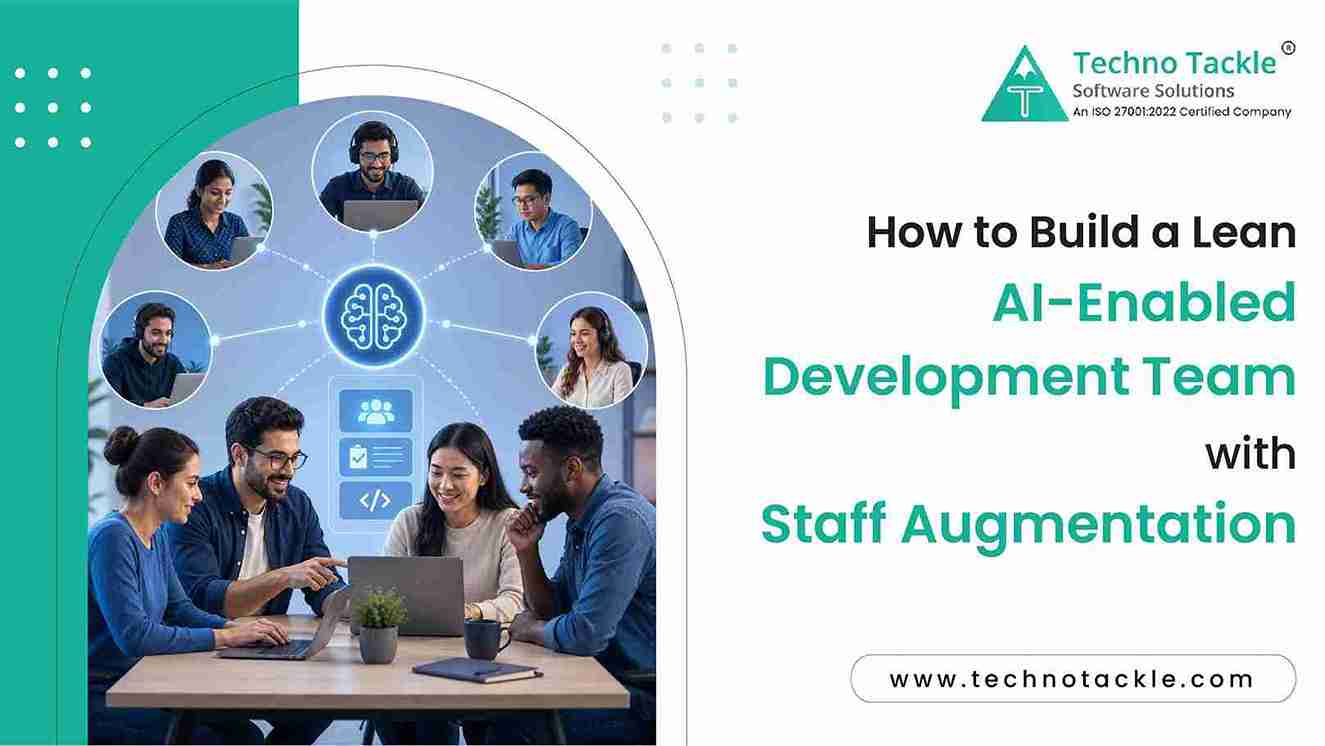
Staff augmentation developers collaborating with an AI-assisted development team to integrate augmented developers into a modern software development workflow

April 25, 2026

Growing your engineering capacity without the cost and delay of full-time hiring is one of the biggest operational challenges for technology businesses in 2026. Development team augmentation solves this , but only when the integration is handled correctly.

This guide covers exactly how businesses integrate augmented developers into their internal teams: the steps that work, the IT staff augmentation challenges that derail most engagements, and the metrics that tell you whether it is working.


What Is Development Team Augmentation?

Development team augmentation is a staffing model where external developers join your existing engineering team and work under your processes, tools, and management , rather than operating as a separate outsourced unit.

The short answer: You bring skilled developers in. They work like your employees. You keep full control.

Unlike outsourcing, where you hand a project to an external team and wait for deliverables, augmented developers attend your standups, commit to your repositories, work within your sprint cycles, and report to your internal leads. The relationship is collaborative, not transactional.


When businesses choose development team augmentation:

  • They need a specific skill set (React, DevOps, ML engineering, QA automation) faster than a full-time hire can be sourced

  • The existing team is at capacity during a product launch or deadline sprint

  • A project requires temporary senior-level expertise without a permanent salary commitment

  • They want to scale engineering headcount up or down with business demand

The global IT staff augmentation market was valued at $132 billion in 2023 and is forecast to exceed $200 billion by 2028, driven by the speed-to-hire advantage it gives businesses over traditional recruitment.


Staff Augmentation vs Outsourcing vs Full-Time Hiring: What Actually Works?

Before committing to a model, businesses need to understand where each approach delivers , and where it breaks down.


Development Team Augmentation

Outsourcing

Full-Time Hire

Control over day-to-day work    

Full

Limited

Full

Speed to start

1–2 weeks

2–4 weeks

2–4 months

Cost

Medium

Low–Medium

High

IP and code ownership

Yours

Negotiated

Yours

Team culture integration

High

Low

High

Best for

Ongoing sprints, scale-up

Fixed-scope projects

Long-term roles


The verdict: For businesses that need developers to work within existing Agile teams on continuous delivery, augmentation outperforms outsourcing. For self-contained projects with clear deliverables, outsourcing may suit better. For roles that require deep institutional knowledge over years, full-time hiring wins.


How Businesses Integrate Augmented Developers into Internal Teams

This is the section that separates engagements that deliver from those that disappoint. Integration is not automatic , it is a managed process that starts before the developer joins and continues through their first 90 days.


Step 1: Define Roles and Responsibilities Before Day One

The most common reason augmented developers underperform is ambiguity. They join a team without a clear answer to who they report to, what they own, and where their decision-making authority ends.


Before onboarding, document and communicate:

  • Who is the single internal point of contact (not the whole leadership team)

  • What specific modules, features, or sprint tickets they are responsible for

  • What they are explicitly not responsible for, so there is no stepping on internal team toes

  • When they can act independently versus when they need sign-off

  • How their work will be reviewed and by whom

This clarity removes the first two weeks of political navigation and lets the developer contribute immediately.


Step 2: Onboard Augmented Developers Like Full-Time Hires , Not Contractors

The fastest way to destroy the value of development team augmentation is to treat augmented developers as external vendors. When developers feel like outsiders, they act like outsiders , minimal initiative, minimal ownership, minimal communication.


A structured onboarding for augmented developers includes:

  • Access to all required tools on day one: Jira, GitHub, Slack, Confluence, CI/CD pipelines

  • A recorded walkthrough of the codebase architecture , do not expect a new developer to reverse-engineer months of decisions alone

  • A 15-minute team introduction call , this single step measurably improves early collaboration quality

  • A written 30-day ramp plan with milestones at week 1, week 2, and week 4

Businesses that run structured onboarding for augmented developers report 40% faster time-to-first-contribution compared to those that hand over repository access and expect developers to figure it out.


Step 3: Build Communication Structures Into the Process

Augmented developers often work across time zones, cultural communication styles, and without the informal conversations that naturally fill gaps in co-located teams. Left unstructured, communication gaps compound into missed deadlines and duplicated work.


Communication structures that consistently work:

  • A daily async check-in via Slack: what was done yesterday, what is being worked on today, any blockers

  • A weekly 1:1 between the augmented developer and their internal lead , not a status meeting, but a conversation about how the integration is going

  • Full participation in sprint ceremonies: planning, review, and retrospective , not just receiving assigned tickets

  • A documented escalation path so the developer knows exactly who to contact when blocked, rather than waiting

On time zones: A minimum 3-hour daily overlap window is required for effective collaboration. If your team is in the UK and your augmented developer is in India, 2pm IST / 9:30am UK gives a workable morning overlap. Anything less than 2 hours of overlap turns async communication into 24-hour email cycles.


Step 4: Transfer Knowledge Actively , Do Not Assume It Happens Naturally

One of the hidden costs of development team augmentation is tribal knowledge: the architectural decisions, client context, and workflow conventions that live in your internal team's heads and nowhere else. Augmented developers cannot access this intuitively, and gaps in context cause real delays.


Practical knowledge transfer methods:

  • Record short Loom or Zoom walkthroughs of architecture decisions and key processes , reusable and faster than explaining the same thing repeatedly

  • Maintain a living internal wiki (Confluence, Notion, or similar) that augmented developers are expected to contribute to , their outsider perspective frequently catches documentation gaps that internal teams overlook

  • Run pair programming sessions in the first two weeks , not to supervise, but to transfer context in both directions

  • Use code review as a knowledge transfer tool: explain the why behind feedback, not just the what


Step 5: Measure Integration With Metrics, Not Assumptions

"It seems to be going well" is not a measurement. Businesses that sustain effective development team augmentation track integration numerically and review it regularly.


Key integration metrics:


Metric

What it measures

Healthy benchmark

Time to first PR merged

Speed of initial contribution

Within 5 business days

Sprint completion rate

Commitment reliability

80%+ of assigned story points

Code review cycle time

How fast their PRs get reviewed     

Under 24 hours

Bug rate vs. internal average

Output quality

Within 20% of internal average

Communication response time

Accessibility during overlap

Under 4 hours

Blocker resolution time

How fast blockers are cleared

Same business day


Review these monthly for the first quarter. A metric consistently off target usually signals a process problem , not a people problem. Fix the process first.


IT Staff Augmentation Challenges , and How to Overcome Them

Even well-planned augmentation engagements encounter friction. These are the most common IT staff augmentation challenges businesses face, and how to resolve each one before it derails the project.


Challenge 1: Cultural Mismatch in Communication Style

Different professional cultures have different norms around disagreement, deadline pressure, and feedback. A developer from a culture that avoids direct refusal may accept an unrealistic deadline rather than flag it early. An internal team accustomed to blunt feedback can unintentionally create a hostile environment for a developer from a more formal culture.

Resolution: Run a 30-minute working-styles session in the first week. Ask both sides how they prefer to communicate, how they handle blockers, and what feedback styles work for them. This is not a soft exercise , it prevents months of misread signals and missed escalations.


Challenge 2: Time Zone Friction

When daily overlap drops below 2 hours, asynchronous communication becomes a bottleneck that compounds across every sprint. A blocker raised at end-of-day takes 24 hours to resolve instead of 2.

Resolution: Negotiate a minimum 3-hour overlap window before signing any augmentation agreement. Make this a hard requirement, not a preference. Build all sprint ceremonies within that window.


Challenge 3: Integrating Augmented Staff Into Existing In-House Dev Teams Successfully

The most common integration failure is treating augmentation as plugging a person into a ticket queue, rather than integrating them into the team's rhythm. Augmented developers assigned only tasks , without context, ceremony participation, or ownership , contribute at a fraction of their potential.

Resolution: Give augmented developers a named module or feature area to own, not just a backlog of tasks. Ownership creates accountability. Include them in architectural discussions relevant to their area. Review their integration as a team health metric, not just an individual performance metric.


Challenge 4: Data Security and IP Protection

Augmented developers will access your codebase, internal systems, and potentially client data. Without a proper security framework, this represents real legal and compliance exposure.

Resolution:

  • Sign NDAs and IP assignment agreements before any repository access is granted

  • Implement role-based access control , augmented developers access only what their role requires

  • Verify that your staff augmentation partner's data handling policies are compatible with your compliance requirements (GDPR, SOC 2, HIPAA as applicable)

  • Conduct a security onboarding session covering your data handling policies on day one


Challenge 5: Methodology Mismatch

A developer with strong waterfall experience will struggle in a fast-moving Agile team. A developer used to autonomous Kanban flow will underperform in a structured two-week sprint environment.

Resolution: Make methodology experience a selection criterion, not an afterthought. In the first sprint, assign a smaller, well-defined task that allows the developer to observe the team's rhythm before taking on complex parallel work.


How to Measure the Success of Development Team Augmentation

At the programme level, measure augmentation health quarterly across four dimensions:

1. Velocity impact Did overall sprint velocity increase with the augmented developer contributing? Compare the team's average story points per sprint before and after augmentation. A well-integrated augmented developer should increase team velocity by their individual contribution within 60 days.

2. Cost efficiency vs. alternatives What would a full-time developer at equivalent seniority have cost in salary, benefits, onboarding, and equipment over the same period? Augmentation typically costs 30–50% less than the full-time equivalent when all employer costs are included.

3. Knowledge and codebase quality Is your internal documentation better? Has technical debt decreased? Augmented developers who are properly integrated contribute to knowledge assets, not just feature delivery.

4. Internal team health Survey your internal team quarterly. Poorly integrated augmented developers create friction , duplicated work, communication fatigue, resentment , that shows up in internal satisfaction scores and, eventually, attrition.

A successful development team augmentation engagement should be measurably positive on at least three of these four dimensions within 90 days. If it is not, the integration process needs review , not necessarily the augmented developer.


Benefits of Team as a Service: Why Businesses Are Moving Beyond One-Off Augmentation

An evolution of traditional staff augmentation is the Team as a Service (TaaS) model , where rather than augmenting individual roles, businesses contract a pre-formed, cross-functional team that integrates with their existing engineering organisation.


Key advantages of TaaS over individual augmentation:

  • The augmented team arrives with existing working relationships, communication patterns, and shared technical standards

  • No individual ramp-up period , the team has already established its rhythm

  • Leadership, QA, and delivery management are included, reducing the internal coordination burden

  • Easier to scale , adding a team is faster than sourcing and onboarding multiple individual developers

TaaS works best for businesses that need to stand up an entire product stream or engineering department quickly, rather than fill individual capability gaps.


The Future of Development Team Augmentation

Development team augmentation is becoming a core engineering strategy, not a gap-fill measure. Several trends are shaping how it evolves through 2026 and beyond:

AI-assisted developer matching: Platforms now use AI to match augmented developers to teams based on technical stack compatibility, working style, communication preferences, and past project type , not just CV keywords. Match quality has improved significantly.

Outcome-based contracts: The industry is shifting from time-and-materials billing toward deliverable-based agreements. This reduces management overhead and aligns incentives between the augmented team and the client.

Hybrid near-shore and offshore models: Rather than choosing between cost (offshore) and overlap (near-shore), businesses are building augmented teams that blend both , offshore developers covering deep work hours, near-shore developers covering overlap-heavy coordination roles.

Businesses that build integration playbooks now , documented onboarding, communication frameworks, and performance metrics , will scale augmented teams faster and at lower cost as these models mature.


Summary

Development team augmentation delivers when integration is treated as a managed discipline from day one. The businesses that get consistent results follow five practices:

  1. Define roles, ownership, and reporting lines before the developer starts

  2. Onboard augmented developers with the same structure as full-time hires

  3. Build explicit communication routines , async check-ins, 1:1s, and sprint ceremonies

  4. Transfer knowledge actively through recordings, documentation, and pair programming

  5. Track integration with concrete metrics reviewed monthly for the first quarter

If your business is evaluating development team augmentation, or if you want to improve the integration of developers already working with your team, our team can help you build the right engagement model.


Frequently Asked Questions

What is development team augmentation?

Development team augmentation is a staffing model where external developers are embedded into your existing engineering team and work under your internal processes, tools, and management. Unlike outsourcing, you retain full control over day-to-day work and the developer operates as a practical extension of your internal team.

How do businesses integrate augmented developers into internal teams?

Successful integration follows five steps: define roles and reporting lines before the developer starts; onboard them with tool access, codebase walkthroughs, and a 30-day ramp plan; establish daily async check-ins and sprint ceremony participation; run active knowledge transfer sessions in the first two weeks; and track integration metrics , PR merge time, sprint completion rate, and communication response time , monthly.

What are the main IT staff augmentation challenges?

The most common IT staff augmentation challenges are cultural communication mismatches, insufficient daily overlap time between time zones, unclear role ownership, data security and IP protection gaps, and methodology mismatches between the augmented developer's background and the team's Agile or Kanban workflow.

How long does it take for an augmented developer to become fully productive?

With a structured onboarding process, most augmented developers submit their first usable pull request within 5 business days and reach full sprint productivity , contributing at parity with internal team members , within 3 to 4 weeks.

How does staff augmentation differ from outsourcing?

In staff augmentation, external developers work within your team under your management and processes. In outsourcing, an external team manages the work independently and delivers outputs. Augmentation gives you more control and cultural integration; outsourcing gives you less management overhead. For ongoing sprint-based development, augmentation typically performs better.

What is integrating augmented staff into existing in-house dev teams successfully?

Successful integration of augmented staff means the augmented developer is contributing at sprint parity within 30 days, is participating in ceremonies and architectural discussions, and has a named ownership area , not just a ticket queue. The measure of success is whether your internal team sees them as a colleague, not a contractor.

What is Team as a Service (TaaS)?

Team as a Service is a model where a business contracts a pre-formed, cross-functional development team rather than individual augmented developers. The team arrives with established working relationships, communication patterns, and shared technical standards, making integration faster than individual augmentation at scale.

Share On :

Don't Miss to Claim Your Free Consultation!

We love hearing from our clients and developing their ideas into digital reality. Our team is here to answer all of your questions and provide you with a wide range of IT services that enable you to develop your company.

I am a company

Looking for service

Looking for a Job?

Apply Here
INDUSTRIES