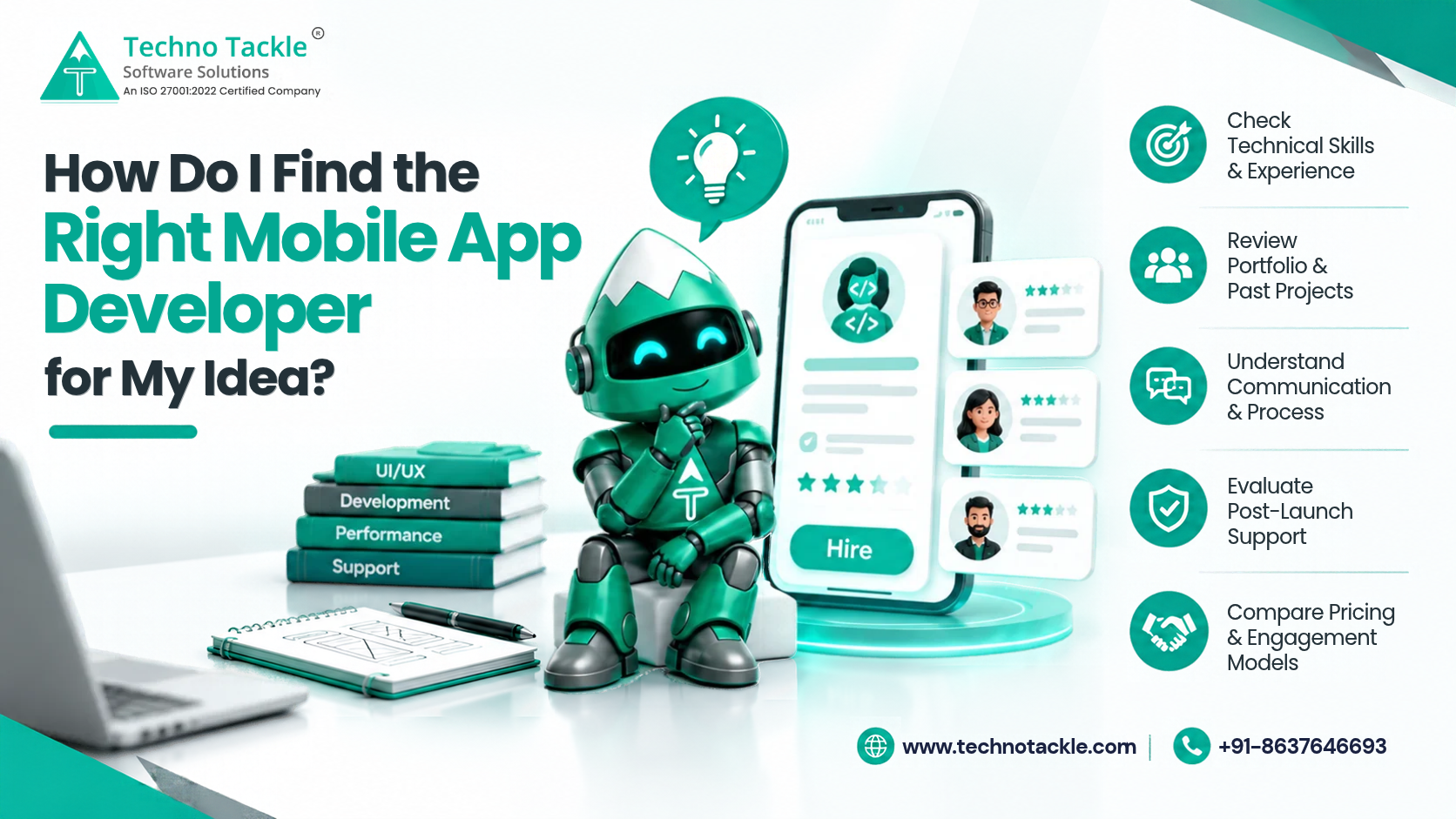
Most app ideas do not fail because the idea was bad. They fail because the founder hired the wrong person, found out three months and a lot of money later, and had to start again.
Here is the short answer. To hire mobile app developers who fit your idea, decide three things first: what you are building, how much of it you need for version one, and how you want to work with the team. Then check proof of shipped apps, ask the right questions, and start with a small paid trial.
This guide walks through each step in order.
Step 1: Write Down Your Idea Before You Talk to Anyone
Developers can only quote what you can describe. Before any call, write one page covering:
-
Who the app is for. One user type is enough to start.
-
The one problem it solves. If it takes two paragraphs, the scope is too wide.
-
The main flow. What does a user do from opening the app to getting value?
-
Must-haves vs nice-to-haves. Be strict. This list decides your cost and timeline.
-
Platforms. iPhone, Android, or both, and why.
If you are not sure what belongs in version one, read our guide on mobile app development for startups. It helps you cut scope before you spend money.
Step 2: Choose the Type of Developer You Need
There are three common routes. Each fits a different situation.
Freelancer. Best for small, well-defined jobs and quick fixes. The main risk is that you depend on one person. If they leave or get busy, your project stalls.
Mobile app development company. Best for a full build from idea to store launch, with design, development, and testing in one place. The cost is higher than a freelancer, and quality varies by company, so check their shipped apps first.
Dedicated developers through staff augmentation. Best when you have a product lead and want extra engineers inside your own process. The main risk is that you must manage the work day to day.
If you have no technical lead, a company is usually the safer choice. If you have one, extending your team with dedicated engineers can be faster and cheaper over a long roadmap.
Our post on choosing the right engagement model compares fixed scope, dedicated team, and hourly work in more detail.
Step 3: Pick the Right Technology Path
You do not need to be technical, but you should know the three options, because they change both price and who you hire.
-
Native Android (Kotlin or Java) or native iOS (Swift): best performance and access to every device feature. Higher cost if you need both platforms.
-
Cross-platform (Flutter or React Native): one codebase for both platforms. Usually faster and cheaper for a first release.
-
Hybrid web apps: a web app inside a mobile wrapper. Cheapest, but less smooth for demanding features.
For most first releases, cross-platform is a sensible default. Choose native when the app depends on heavy graphics, advanced camera or sensor use, or the best possible speed.
Our post on cross-platform mobile development explains when each path makes sense.
Once you know the path, look for the matching skill. For a cross-platform first release, you can hire Flutter app developers who build both platforms from one codebase. For a native iPhone app, you need Swift specialists instead.
Step 4: Check What They Have Actually Shipped
This is the step most founders skip. A good portfolio is not a list of logos. Ask for:
-
Live apps you can install. Download them. Use them. Check the store rating and recent reviews.
-
What the company built in each one. Did they design it, build it, test it, or only part of it?
-
A reference you can call. A client who will talk to you without the vendor on the line.
-
Proof of long relationships. Clients who stay for years are a better signal than a long logo wall.
A real mobile app development company in India should show live apps on the Play Store or App Store, name the technologies it uses, and explain how it handles design, testing, and launch. If you only get slides, ask for more.
Step 5: Ask Questions That Expose Weak Teams
Use these in your first call.
-
Who will actually work on my app? Ask to meet or speak with the engineer, not only a sales lead.
-
What happens if the developer leaves mid-project? You want a replacement plan, not a pause.
-
How do you test before launch? Look for structured testing, not "we check it ourselves."
-
Who owns the source code and accounts? The answer should be you, from day one, in writing.
-
How do you handle changes to scope? Good teams have a clear change process.
-
What does the first 30 days look like? You should hear about discovery, design, and a first working build, not only "we start coding."
-
What do you need from me? Strong teams ask for decisions, content, and feedback times. Weak ones promise they need nothing.
A second pair of eyes on quality helps too. An outside software QA testing team can review the app before launch without slowing the build.
Step 6: Understand What Drives Cost and Time
Any vendor who gives one flat price before reading your brief is guessing. These factors move the number:
-
Number of platforms
-
Number of screens and features
-
Design depth and custom animation
-
Login, payments, maps, chat, and other integrations
-
Backend and admin panel work
-
Testing and launch support
-
Team seniority and location
Timelines depend on the same list. As a rough guide, our own FAQ says an average app takes about six to seven months from concept to launch, and technical apps can take a year or more. A smaller first release can ship much sooner.
Ask for a phased plan with a first usable release date. If your goal is to test demand fast, a minimum viable product keeps the first build small and the learning quick.
If you are leaning towards India, read what to expect on pricing and hiring models in our guide to hiring iOS developers in India. Many of the same points apply to Android.
Step 7: Start Small With a Paid Trial
Before you sign a long contract, run a short paid project. A two-to-four week task on real work, such as a prototype of your main flow, tells you more than any pitch.
During the trial, watch for:
-
Do they ask smart questions about users, not only features?
-
Do they share progress on a schedule?
-
Is the work easy for you to review?
-
Do they flag risks early, or hide them?
-
Do they respond within the time they promised?
If the trial goes well, scale up. If not, you have lost weeks, not months.
Red Flags When You Hire Mobile App Developers
-
A price quoted in minutes, with no questions asked
-
No live apps to show, or portfolio apps they cannot explain
-
No named engineer until after you sign
-
Pressure to pay a large share upfront
-
Code or store accounts held in the vendor's name
-
No plan for testing, bug fixes, or support after launch
-
Promises of "no problems" or "everything is possible"
Bottom Line
The right developer is not the cheapest or the most polished in a pitch. It is the team that asks good questions, shows live apps, explains trade-offs honestly, lets you own your code and accounts, and proves itself in a small trial before you commit.
Write your one-page brief, shortlist two or three teams, check their shipped apps, run the seven questions above, and start with a paid trial. If you want a fast route, you can hire mobile app developers from a team that handles design, development, testing, and launch under one roof.
Frequently Asked Questions
How do I hire mobile app developers if I am not technical?
Start with a company, not a single freelancer, and ask for live apps, references, and a phased plan. Run a short paid trial before committing. Our guide to choosing a custom software development company applies here too.
Should I choose a freelancer or a mobile app development company in India?
Choose a freelancer for small, well-defined jobs. Choose a company for a full build that needs design, development, testing, and launch support. A company also reduces the risk of one person leaving.
Should I build for Android, iOS, or both?
Choose by where your users are. If you are unsure, a cross-platform build covers both from one codebase and is often the faster route for a first release.
How long does it take to build a mobile app?
It depends on scope, platforms, and integrations. A simple first release can ship in a few months. Complex apps can take a year or more. Ask for a phased plan with a first release date.
How much does it cost to hire mobile app developers?
Cost depends on platforms, features, design depth, integrations, backend work, testing, and team seniority. Ask for a written, itemised quote and compare scope, not only price.
Who should own the source code and app store accounts?
You. Developer and store accounts should be in your company's name from day one, and the contract should assign the code to you.
What should I do before I contact developers?
Write a one-page brief with your target user, main problem, core flow, must-have features, and platforms. Teams can only give a useful quote for something you can describe clearly.
Not sure which route fits your idea? That is a short conversation, not a long project.
Book a free 15-minute consultation with our team
Related reading: