October 23, 2026
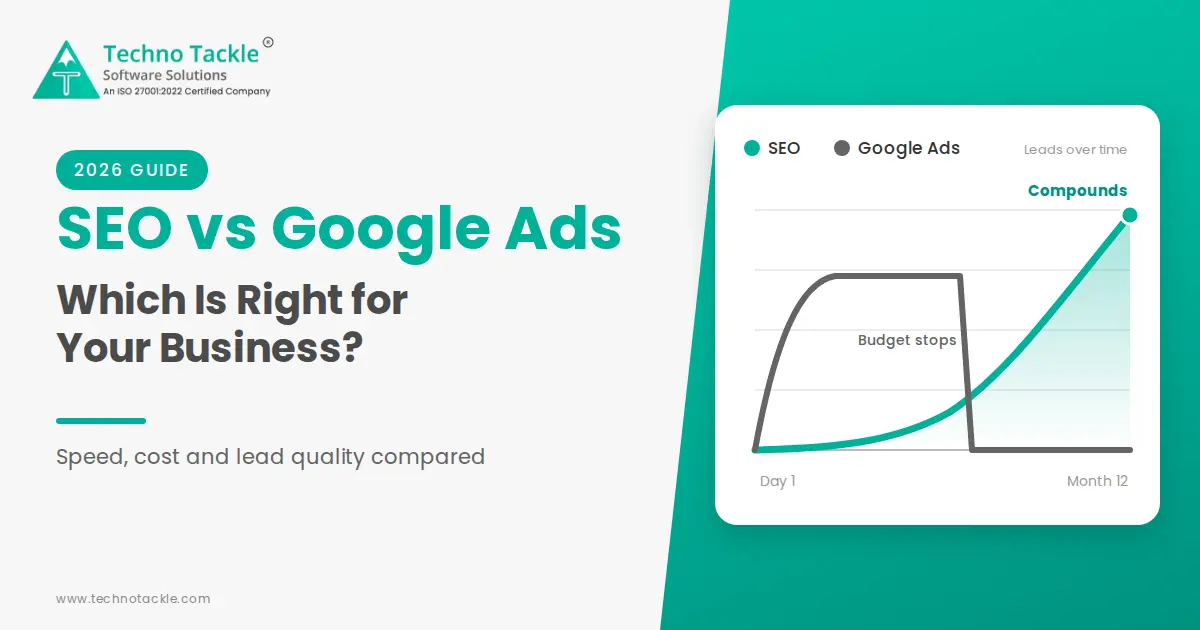
Quick answer: SEO vs Google Ads is a timing and cash flow decision, not a winner-takes-all choice. Google Ads brings leads in days, but the leads stop when your budget stops. SEO takes 3 to 12 months, but it keeps bringing visitors without a cost per click. For most B2B companies, the best plan is to start with Google Ads, build SEO at the same time, and shift budget as your rankings grow.
You need more qualified leads. Your sales team needs more conversations. Your founder wants growth this quarter, not next year. So you ask the obvious question: should we invest in SEO or Google Ads?
This guide gives you a straight answer. You will see how each channel works, what each one really costs, which one fits your situation, and how to combine them without wasting money.
Key Takeaways
-
SEO vs Google Ads is not a fight. It is a decision about speed, cost, and how long you can wait.
-
Google Ads can generate leads within days. Those leads stop the moment you pause the campaign.
-
SEO usually takes 3 to 12 months to build momentum. After that, each click does not cost you a fee.
-
Organic vs paid search users behave differently. Organic builds trust. Paid captures urgent demand.
-
For most B2B and IT service companies, the strongest plan is Google Ads first, SEO in parallel, then a gradual shift of budget.
-
Your website speed, tracking, and landing pages decide whether either channel pays off.
Why SEO vs Google Ads Is a Costly Question to Get Wrong
Most companies answer this question with a guess. One team hears that SEO is free traffic and starts publishing blog posts. Another team hears that ads are instant and loads a credit card. Both teams are working with half the story.
The SEO vs Google Ads debate is also harder in 2026. Google now shows AI Overviews on many searches. Buyers research on YouTube, Reddit, and LinkedIn before they ever visit your website. The old advice to just rank on page one is no longer enough.
Here is the real problem. The choice between organic vs paid search is about when you need leads and how much you can spend to get them. Treating it as a branding debate is how budgets get wasted.
What Happens When You Choose the Wrong Channel
A wrong choice is not neutral. It costs money, and it costs time. Time is the one thing you cannot buy back.
When You Rely Only on Google Ads
Google Ads works like rent. You pay for the top spot every month. When you pause, your leads stop the same day. You own nothing at the end.
There is a second problem. Your competitors can bid on the same keywords. Prices rise, and your cost per lead rises with them. In B2B and IT services, a few weeks of poor targeting can burn through a quarter of your budget with very little to show for it.
When You Rely Only on SEO
SEO is slow. Most sites need months before rankings turn into steady leads. If your pipeline is thin today, waiting that long hurts. You also get slow feedback. You cannot test a new offer or message in a week.
When Neither Channel Is Set Up Properly
This is the most common case. Many companies lose money on the gaps around the channel, not on the channel itself. Look at this list and check how many apply to you:
-
A slow website that wastes paid clicks
-
Landing pages that do not match what the visitor searched for
-
No conversion tracking, so you cannot tell which keywords bring real leads
-
Blog posts written for search engines and not for buyers
-
No follow-up process for the leads you do get
If you ticked two or more, the SEO vs Google Ads question is not your biggest problem. Fix the foundation first. We explain how later in this guide.
SEO vs Google Ads: What Is the Difference?
SEO vs Google Ads comes down to how you earn visibility on Google. SEO earns organic rankings through useful content, technical quality, and authority. Google Ads buys paid placement through a bidding system, and you pay when someone clicks.
What Is Google Ads?
Google Ads is Google's paid advertising platform. You choose keywords, write ads, set a budget, and bid for placement at the top of the results page. Your ad can go live within days. You pay per click, and your visibility ends when your budget ends.
What Is SEO?
SEO means search engine optimization. It is the work of improving your website so it ranks naturally in Google. That includes technical fixes, page structure, content that answers real questions, and links from trusted sites. You do not pay Google for any click.
How Organic vs Paid Search Results Appear
On a typical results page, ads appear first and are marked as Sponsored. Organic results sit below them. In 2026, an AI Overview may appear above both. This is why organic vs. paid search is no longer a simple two-lane road. Your brand needs to show up in several places.
SEO vs Google Ads: Key Differences
Here is how the two channels compare on the factors that matter most for lead generation.
Time to first lead: Google Ads can bring your first lead in days. SEO usually takes 3 to 12 months.
Cost model: With Google Ads, you pay for every click, and the cost goes on as long as the campaign runs. With SEO, you pay upfront and monthly for the work, but you do not pay a fee per click.
If you stop spending: When you stop paying for Google Ads, your traffic stops at once. When you pause SEO work, your rankings usually hold for a while.
Trust: Google Ads results are marked as Sponsored. Organic results often earn more trust from buyers.
Targeting control: Google Ads gives you high control. You can target by location, device, time, and keyword. SEO gives you medium control, because you can only guide who finds you through keywords and search intent.
Compounds over time: Google Ads does not build on past spend. Each month starts from zero. SEO does compound, since pages that rank keep bringing visitors and support new pages.
Main risk: The main risk with Google Ads is a rising cost per click. The main risk with SEO is a slow start and changes in Google’s algorithm.
Best for: Google Ads works best for launches, special offers, and urgent demand. SEO works best for long-term growth and authority.
SEO vs Google Ads: A Detailed Breakdown
Speed to Results
How Fast Google Ads Works
Google Ads is the faster channel. A well-built campaign can bring visitors within hours or days of launch. This makes it useful for new products, limited-time offers, and testing demand.
How Fast SEO Works
SEO is the slower channel. Your site needs content, technical quality, and trust signals before Google rewards it. Many sites see early movement in three to six months. Competitive markets can take longer.
Cost and Return on Investment
What Google Ads Costs
You pay per click, so your total cost depends on competition. Business and technology keywords are often expensive.
What Drives Your Cost Per Click
Keyword competition, ad quality, landing page quality, and targeting all affect what you pay. A poor landing page can make every click more expensive.
What SEO Costs
SEO needs upfront and ongoing work: technical fixes, content, and link building. You do not pay per visitor. Once a page ranks, it can bring leads for months with regular updates. This is why SEO often has the better long-term return.
Trust and Lead Quality
Many buyers trust organic results more than ads because the page earned its position. Ads can still work well when the ad and the landing page match the search. On the other side, SEO visitors often arrive while researching, so they may need more nurturing before they talk to sales.
Control and Targeting
Google Ads gives you more control. You can target by location, device, language, and time of day. SEO gives you less direct control. You can shape who finds you through the keywords and topics you choose, but you cannot pick the exact viewer.
Organic vs Paid Search: Which Should You Choose?
Use these rules to decide. Be honest about your cash position and your timeline.
Choose Google Ads If
-
You need enquiries this month
-
You are launching a new service or product
-
You have a budget you can commit to for at least three months
-
You want to test which keywords and offers convert before investing in content
Choose SEO If
-
You are building a business for the next five years, not the next five weeks
-
You want to lower your cost per lead over time
-
Your buyers research for weeks before they talk to sales
-
You can wait several months for results
Use Both If
-
You want fast leads now and lower costs later
-
You work in a competitive market where ad costs are high
-
You want ad data to guide your SEO keyword choices
Best Choice by Business Type
B2B and IT services: Lead with SEO and content, because buying cycles are long and trust matters. Add Google Ads on a short list of high-intent keywords to keep the pipeline moving.
E-commerce: Use Google Ads for product pages and shopping campaigns. Use SEO content to bring in buyers earlier and to lower your ad dependence over time.
Local and urgent services: Use Google Ads for urgent searches. Add local SEO so you also appear in the organic results and map listings.
The Smart 2026 Strategy: Use Both in Phases
The best answer to SEO vs Google Ads for most growing companies is a phased plan. Google Ads covers today. SEO covers tomorrow. Here is a simple version you can follow.
-
Days 1 to 30: fix the foundation. Check site speed, set up conversion tracking, and build focused landing pages. Launch Google Ads on a small list of high-intent keywords.
-
Days 30 to 90: learn what works. Review which keywords bring qualified leads, not just clicks. Cut the waste. Use those winning keywords as the base for your SEO plan.
-
Months 3 to 6: build. Publish content that answers real buyer questions. Strengthen your service pages. Add case studies and internal links.
-
Months 6 to 12: shift budget. Where you now rank near the top, reduce ad spend on those terms. Keep ads for new offers and highly competitive keywords.
-
Every month, measure cost per qualified lead. Compare both channels on the same number. Move money to the one that performs.
This approach turns your ad budget into research. Google Ads shows you which keywords convert. SEO then makes those keywords cheaper over time.
How AI Overviews and Video Change Organic vs Paid Search in 2026
Search is changing. Google often shows an AI Overview at the top of the page. Videos and forum threads also appear in results. As far as we can tell, these features tend to draw from pages and videos that give a clear, direct answer. Nobody outside Google can promise how they choose, so treat the tips below as good practice, not a guarantee.
-
Answer first. Put a short, direct answer under each question heading.
-
Use clear structure. Tables, short sections, and numbered steps are easy for people and for search systems to read.
-
Write headings as real questions. Match the way buyers search.
-
Add a FAQ. It helps you cover related questions in one page.
-
Support key pages with video. A short explainer on YouTube, with a full transcript on the page, gives you a second way to show up.
-
Keep content fresh. Update numbers and examples at least twice a year.
Ads still sit above the results, but the space around them keeps changing. This is one more reason not to depend on a single channel.
How Techno Tackle Solves the SEO vs Google Ads Problem
Most agencies manage ads or content. Few can also fix the website underneath. Techno Tackle is a software development company with a digital marketing team. That means we can tune your campaigns and also fix the technical problems that waste your spend.
SEO Services Built for Lead Generation
Our SEO services focus on keywords that bring buyers, not just traffic. We audit your site, fix technical issues, and build pages that match search intent. The goal is more qualified enquiries, not more vanity numbers.
Google Ads Management That Protects Your Budget
Our Google Ads services start with tracking and keyword research. We target high-intent searches, write ads that match the landing page, and review spend often. You see which keywords bring real leads, so you stop paying for the rest.
SEO-Ready Websites and Landing Pages
Slow pages waste both paid and organic traffic. Our website development team builds fast, mobile-friendly sites with a clear structure that search engines can read. We can also build landing pages that turn clicks into enquiries.
Content That Answers Buyer Questions
Our content marketing services create blog posts, service pages, and guides that answer the questions your buyers ask. Each piece is built to rank, and to move the reader toward a call.
One Plan Across Both Channels
Our digital marketing team puts paid and organic work into one plan. We use ad data to guide SEO, and we use SEO results to lower ad spend. One team, one report, one cost per lead to track.
Why Businesses Trust Techno Tackle
Techno Tackle has been in business for more than 11 years. We have worked with over 300 clients across more than 10 countries, and we are ISO 27001:2022 certified. Our clients rate us 4.8 out of 5 on both Google and Clutch.
Our long-running work shows how we operate. For 1851 Franchise, a franchise media and publishing company in Chicago, we built and maintain their digital publishing platform with a dedicated five-person team. The work covers Next.js, Laravel, Node.js, and QA, and it reduced hosting costs for a non-technical founder. Their Chief Growth Officer describes the team as a true extension of his internal team.
Why does this matter for SEO vs Google Ads? Because both channels depend on a fast, stable, well-built website. We understand that foundation, and we have kept it running for clients for years.
Common SEO vs Google Ads Mistakes to Avoid
-
Judging success by clicks. Measure cost per qualified lead and revenue.
-
Starting ads without tracking. You cannot improve what you cannot see.
-
Targeting keywords that are too broad. Start with specific, high-intent phrases.
-
Writing SEO content that sounds like a sales pitch. Be helpful first.
-
Giving up on SEO after two months. It needs time to compound.
-
Ignoring site speed. A slow page hurts rankings and wastes ad clicks.
Frequently Asked Questions About SEO vs Google Ads
Is SEO better than Google Ads?
It depends on your goal. SEO usually gives a better long-term return because you do not pay per click. Google Ads is better when you need leads quickly. Most growing businesses benefit from using both.
Which is cheaper, SEO or Google Ads?
Google Ads costs less to start, but cost continues every month. SEO costs more upfront in time and work, but each visit becomes cheaper as rankings grow. Over a year or more, SEO is often cheaper per lead.
How long does SEO take to work?
Many sites see early progress in three to six months. Full results can take up to 12 months, and longer in competitive markets. Your site quality, content, and competition all affect the timeline.
Can SEO replace Google Ads?
Not fully. SEO builds lasting visibility, but it cannot launch an offer in a week. Google Ads is still useful for new services, seasonal campaigns, and testing keywords.
What is the difference between organic vs paid search?
Organic vs paid search is the difference between earned and bought visibility. Organic results rank because Google judges the page as relevant and trustworthy. Paid results appear because an advertiser bids and pays per click.
Which is better for B2B lead generation?
B2B buyers research for a long time before they buy, so SEO and content usually carry the most weight. Google Ads helps you capture high-intent searches and test offers while SEO grows.
Next Step: Get a Clear Plan for Your SEO vs Google Ads Budget
You now know the main differences. The harder part is applying them to your business, your market, and your budget. A short conversation can save you months of guessing.
Techno Tackle will review your website, your goals, and your current spend. You will leave the call with a clear view of what to fix first and which channel to prioritize. There is no obligation.
Ready to stop guessing between SEO and Google Ads?
Book a free 15-minute strategy call with Techno Tackle. Bring your website and your goals. We will bring a plan.
Book Your Free Consultation Call Now.
Need your website or tracking fixed before you spend more on traffic? Mention it on the call and we will include it in your plan.